Early Fine Art Dealers specializes in valuing and purchasing important paintings from the 17th century through the early 20th century. Our buyers are in constant search for fine works of art and paintings, spanning the globe for original well-known Old Master, European, American, and early California art. Each year we preview and participate in hundreds of private sales, art shows, gallery showings, exhibitions and auctions. We are in constant search for fine works to purchase. Please contact us today to discuss the sale of one of your paintings. Please note that our gallery only deals with original paintings. No Prints Please.
WE ARE DEALERS OF ORIGINAL PAINTINGS: To contact one of our gallery fine art experts about selling your painting or buying paintings for your collection, complete the form below. Please note that our gallery only deals with original paintings. NO PRINTS PLEASE.
Mannerism
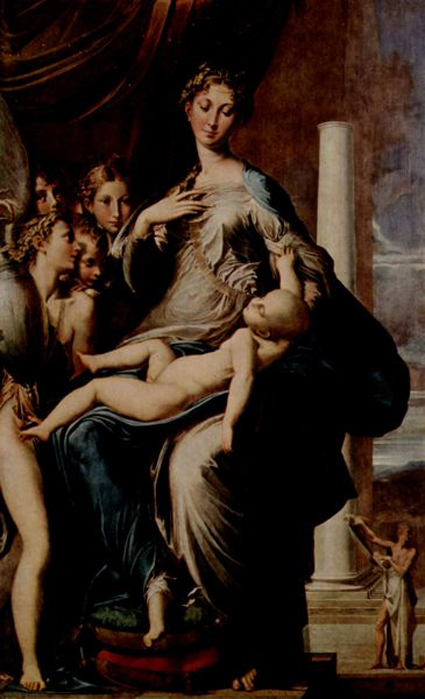
Long considered one of the most unemotional and artificial styles of painting, Mannerism was popular after the "High Renaissance" years which ended in the mid-1500s. The style is typified by its complicated composition, obvious poses and overly elongated figures. Its chief proponent was Michelangelo; though debate about the evolution and spread of the style place painters from earlier and later periods into the category as well. It applies to architecture and literature as well as art.
Mannerism is distinguished by its remarkable technical achievements, but this is also the reason so many see it as devoid of human emotion or relation. The style began in Italy, where it had a firm hold in Rome, Venice and Florence. From these locations it spread to France, where it was popular in the court of Henry II, and then to Prague where Rudolf II was also fond of it.
Painters of Mannerist works, in addition to Michelangelo, include Rosso Fiorentino, Jacopo da Pontormo, Agnolo Bronzino, Allesandro Allori, Jacopo Tintoretto, El Greco, and sculptor Benvenuto Cellini.
Most scholars agree that its time span ran from 1520 to around 1580, when the age of the Baroque and Rococo took over.